
Published August 19, 2026 | 5 min read
Growing plants without traditional soil has been an increasingly important approach in controlled environment agriculture. Two of the most widely recognized systems are hydroponics and aquaponics. While both rely on water to support plant growth, they differ in how nutrients are delivered and how the systems are designed.
So, what exactly is the difference between hydroponics and aquaponics. Just as important, how do you know what system is right for the particular growing operation?
What is Hydroponics?
Hydroponics is a growing method in which plants receive the water, nutrients, oxygen, and other conditions they need to grow in traditional soil.
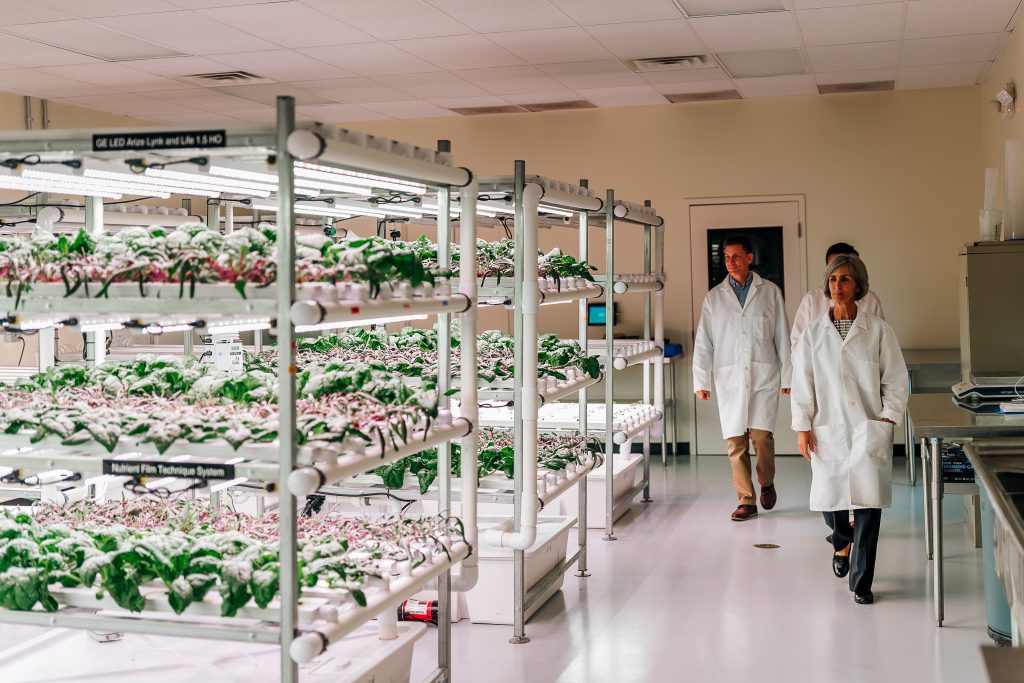
Instead of relying on soil, hydroponic systems deliver a carefully managed nutrient solution directly to plant roots. Depending on that system, plant roots may be suspended in water, supported by an inert growing medium, or periodically exposed to a nutrient solution.
Because growers have greater control over the plants’ growing environment, hydroponic systems can be used to optimize factors such as:
-
-
Nutrient availability
-
-
-
Water use
-
-
-
Root-zone oxygen
-
-
-
pH and electrical conductivity
-
-
-
Temperature
-
-
-
Light
-
-
-
Plant spacing
-
Hydroponics systems are commonly used to grow leafy greens, herbs, tomatoes, cucumber, strawberries, and other crops.
What is Aquaponics?
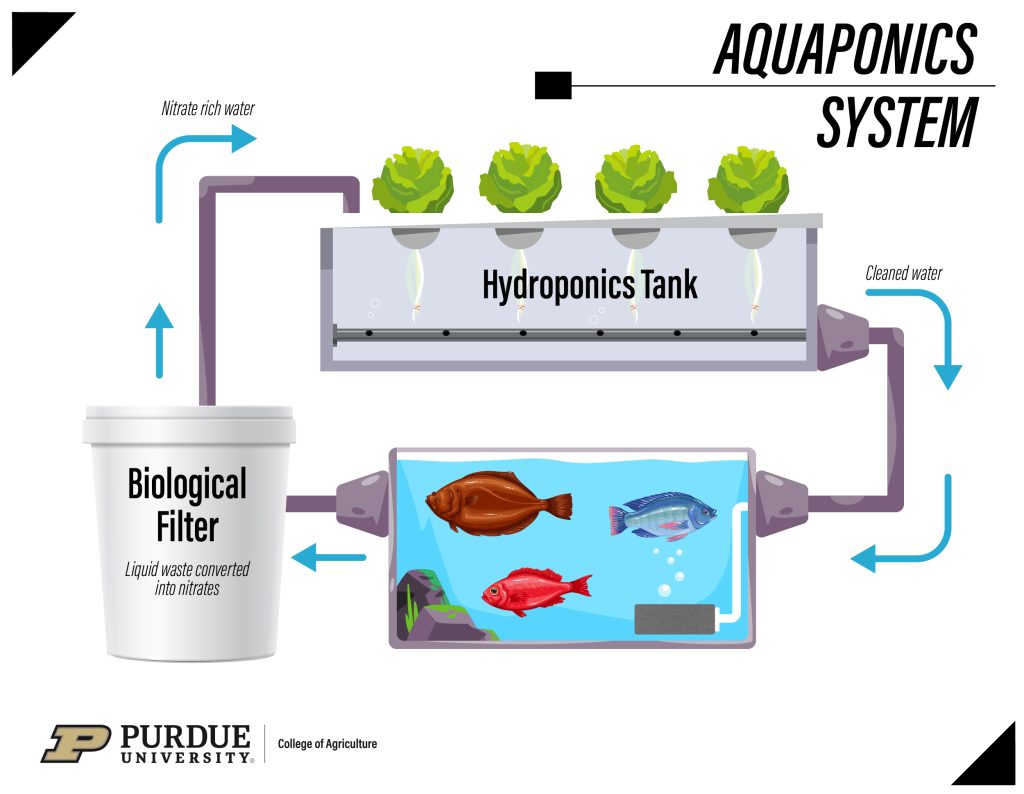
Aquaponics combines aquaculture (the raising of fish or other aquatic animals) with hydroponic plant production.
In an aquaponic system, fish produce waste that contains nutrients. Beneficial microorganisms convert compounds in the fish waste into forms of nitrogen that plants can use. Plants then absorb these nutrients as they grow, helping to clean the water before it is returned to the aquatic portion of the system.
In simple terms, aquaponics creates a connected system:
Fish → Fish waste → Microorganisms → Plant nutrients → Plants → Cleaner water → Fish
This relationship allows plants and aquatic animals to be grown together in a recirculating system.
Hydroponics vs. Aquaponics
Although both systems grow plants without traditional soil, their nutrient sources are different.
| Hydroponics | Aquaponics | |
|---|---|---|
| Primary components | Plants, water, nutrients, and growing equipment | Plants, water, fish, microorganisms, and growing equipment |
| Nutrient source | Nutrient solution is added and carefully managed | Nutrients primarily originate from fish waste |
| Fish required? | No | Yes |
| Water circulation | Water is circulated through the plant system | Water circulates between the aquatic and plant systems |
| Nutrient control | Growers can directly adjust nutrient concentrations | Nutrient availability depends on the balance between fish, microorganisms, and plants |
| System complexity | Can range from simple to highly automated | Requires management of both plant and aquatic environments |
Which System Uses Less Water?
Both hydroponics and aquaponics can significantly reduce water use compared with conventional agriculture because water can be captured, recirculated, and reused rather than continuously flowing through the growing system.
However, water efficiency depends on the design and management of the system. Water can still be lost through plant transpiration, evaporation, cleaning, and other processes.
Aquaponic systems have an additional advantage: the same water supports both the aquatic animals and the plants, creating a highly interconnected production system.
What About Sustainability?
Neither hydroponics nor aquaponics is automatically “more sustainable”. Sustainability depends on how a system is designed and operated.
Factors such as energy use, water management, nutrient inputs, equipment, crop selection, production efficiency, and waste management all influence a system’s environmental footprint.
For example, a highly controlled hydroponic system can optimize water and nutrient use, while an aquaponic system can make use of nutrients generated by fish production. At the same time, both systems may require energy for pumps, lighting, climate control, or other equipment.
The goal is to design and manage the system so that resources are used efficiently while maintaining healthy plant growth.
Why Do These Systems Matter?
Hydroponics and aquaponics are both examples of how controlled environment agriculture can change the way we think about food production.
By carefully managing water, nutrients, light, temperature, and other growing conditions, CEA systems can provide opportunities to produce crops in places or environments where traditional agriculture may be challenging.
These technologies are also helping researchers, growers, and entrepreneurs explore new approaches to resource efficiency, crop production, food security, and year-round growing.
The Bottom Line
The simplest way to remember the difference is this:
Hydroponics grows plants using a carefully managed nutrient solution.
Aquaponics combines plant production with fish production, using nutrients generated by the aquatic system to support plant growth.
Both approaches offer unique opportunities and challenges. The best choice depends on the crop, production goals, available resources, system design, and level of environmental control needed.
As controlled environment agriculture continues to evolve, hydroponics and aquaponics are just two examples of the technologies being explored to make plant production more efficient, innovative, and adaptable.
Tagged Educational, Impact, Research
